A lithium iron phosphate battery, commonly known as a LiFePO4 battery or LFP battery, is a rechargeable lithium-ion battery that uses lithium iron phosphate as its cathode material. For solar energy storage, LiFePO4 technology is valued for its thermal stability, long cycle life, and suitability for repeated charging and discharging. It is widely used in residential solar systems, commercial energy storage cabinets, and off-grid power applications.
For homeowners, solar installers, project developers, and energy storage distributors, choosing the right battery means looking beyond capacity alone. Safety protections, usable energy, operating temperature, inverter compatibility, and lifetime performance all influence the long-term value of a solar storage system. PNG Solar supplies lithium battery products and integrated energy storage solutions designed for different residential and commercial requirements.
This guide explains how LiFePO4 solar batteries work, what affects their lifespan, which safety features matter, and how to select a suitable solution for your project.
What Is a Lithium Iron Phosphate Battery?
A lithium iron phosphate battery is a lithium-ion battery that uses LiFePO4 as its cathode material. Compared with many other lithium-ion chemistries, LFP batteries offer strong thermal stability and good cycle durability, making them a practical choice for stationary solar energy storage.
In a solar power system, the battery stores electricity generated by photovoltaic panels during the day and releases that energy when solar production falls below demand. Depending on the system configuration, stored electricity can support evening consumption, reduce grid electricity purchases, or provide backup power during an outage.
The main components of a complete battery storage solution typically include battery cells, a battery management system (BMS), protective devices, a compatible inverter or power conversion system, and a monitoring interface. In larger installations, thermal management and fire protection may also be integrated into the cabinet.
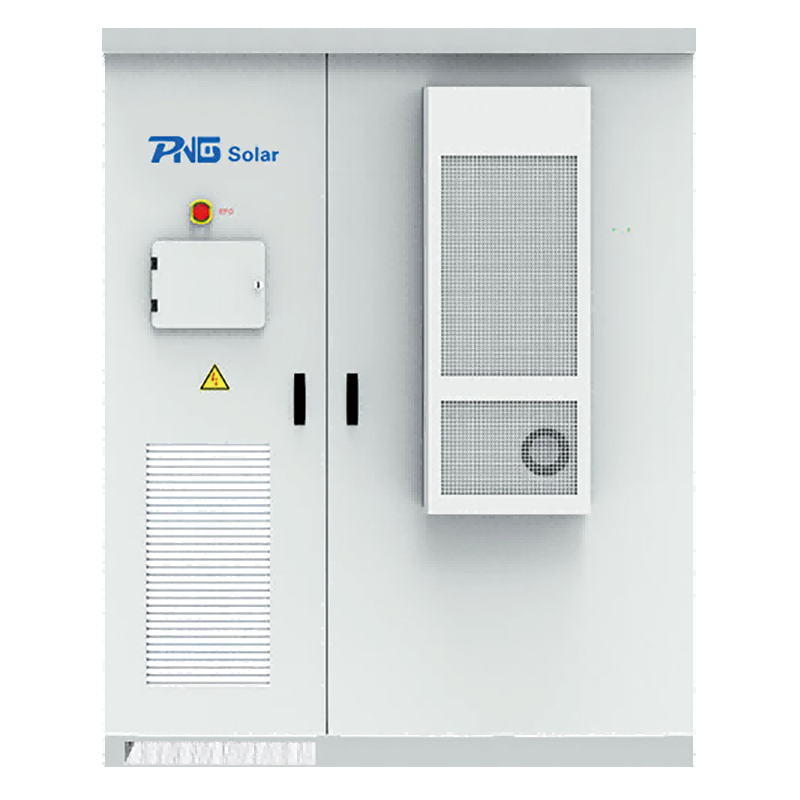
For buyers comparing battery products, PNG Solar provides a range of lithium battery storage solutions, covering different capacities and installation requirements.
Why LiFePO4 Batteries Are Used for Solar Storage
Solar storage batteries operate through repeated charging and discharging cycles. A suitable battery chemistry must therefore balance safety, durability, efficiency, and cost over its service life. LiFePO4 batteries are attractive because they combine several characteristics that suit stationary energy storage.
Thermal stability: The chemistry is generally more thermally stable than nickel-rich lithium-ion chemistries. This can reduce certain thermal runaway risks, although it does not eliminate the possibility of battery fires or other failures.
Long cycle life: Properly designed LFP batteries can support thousands of charge and discharge cycles. Actual cycle life depends on cell quality, temperature, depth of discharge, charging current, and battery management.
Good daily-cycling performance: Solar batteries often charge during daylight hours and discharge after sunset. LiFePO4 technology is well suited to this repeated energy-shifting duty when operated within the manufacturer's specifications.
Modular system design: Residential batteries can be configured for household consumption, while larger battery packs and integrated cabinets can support factories, commercial buildings, and renewable energy projects.
Reduced lifetime replacement pressure: A battery with a long service life may reduce the frequency of replacements. However, the actual financial benefit depends on the initial price, usable capacity, system efficiency, warranty, and operating conditions.
For projects that require storage and power conversion in one coordinated solution, explore PNG Solar's energy storage system (ESS) range to compare available system categories.
LiFePO4 Battery Safety: What Buyers Need to Know
LiFePO4 batteries are widely selected for stationary storage partly because of their favorable thermal stability. Nevertheless, battery safety depends on the complete system, not just its chemical composition. Incorrect wiring, poor installation, overcharging, physical damage, inadequate ventilation, and unsuitable operating temperatures can all create risks.
When evaluating a lithium iron phosphate battery for solar storage, check the following features and installation requirements.
- Battery management system: A BMS monitors key battery parameters and may provide protection against overvoltage, undervoltage, overcurrent, excessive temperature, and cell imbalance.
- Electrical protection: Properly rated fuses, circuit breakers, disconnects, cables, and grounding arrangements help reduce electrical hazards.
- Temperature management: The battery must operate within its specified charging and discharging temperature limits. Charging below the permitted temperature can damage some lithium-ion cells.
- Thermal and fire protection: Depending on the system size and installation environment, appropriate detection, ventilation, separation, and fire suppression provisions may be required.
- Product compliance: Review applicable test reports and certifications, such as IEC 62619 and UN 38.3, where relevant to the product and destination market. Confirm the exact model, scope, and validity of documentation.
- Installation quality: Follow the manufacturer's installation instructions and local electrical, building, and fire codes. Larger systems should be installed and commissioned by qualified professionals.
For example, PNG Solar's published specifications for its 100 kW/125 kW, 261 kWh integrated energy storage cabinet identify LiFePO4 chemistry, a stated cycle life exceeding 8,000 cycles under specified test conditions, an aerosol fire extinguishing system, and an IP54 enclosure rating. These are model-specific features, not universal specifications for every LiFePO4 battery.
Review the PNG Solar 261 kWh integrated energy storage cabinet for further product details and technical parameters.
How Long Does a LiFePO4 Solar Battery Last?
A LiFePO4 solar battery may provide several thousand charge and discharge cycles, and some products specify a design life of ten years or more. These figures are not interchangeable: cycle life describes performance under defined test conditions, while calendar life describes aging over time. Neither number guarantees a specific service life in every installation.
For instance, PNG Solar lists a cycle life of more than 8,000 cycles for certain commercial energy storage cabinets under specified conditions at approximately 25°C and 0.5P charging and discharging. This should be treated as a product specification under stated conditions, rather than a promise that every battery will complete 8,000 cycles in real-world operation.
Several factors influence how long a solar battery remains useful:
- Depth of discharge (DoD): Regularly using a very high proportion of the battery's capacity can affect lifetime. Follow the manufacturer's recommended operating range.
- Temperature: Persistent exposure to excessive heat accelerates aging. Low temperatures can also restrict charging and affect performance.
- Charging and discharging rates: Current and power levels should remain within the battery's rated limits.
- Storage and maintenance: Long periods at unsuitable states of charge or temperatures can contribute to degradation. Follow the manufacturer's storage instructions.
- System compatibility: Incorrect charging settings, poor BMS communication, or an unsuitable inverter can compromise performance and protection.
To compare battery lifespan claims fairly, ask suppliers for the cycle test conditions, end-of-life capacity threshold, warranty period, throughput limits, and any restrictions on operating temperature or discharge depth. A battery rated for 8,000 cycles at one test rate cannot automatically be compared with a product tested under different conditions.
LiFePO4 Battery Lifespan Compared With Other Battery Types
LiFePO4 is not the only option for solar storage. Lead-acid, nickel-based, and other lithium-ion batteries may suit different applications. The right choice depends on the project budget, available space, operating profile, safety requirements, and expected lifetime energy throughput.
| Comparison factor | LiFePO4 | Lead-acid | Other lithium-ion chemistries |
|---|---|---|---|
| Thermal stability | Generally favorable | Different risks, including acid and gas hazards | Varies by chemistry and design |
| Cycle life | Often long under suitable conditions | Generally lower for many deep-cycle products | Varies by chemistry and product |
| Energy density | Lower than many nickel-rich lithium-ion options | Generally low | Some chemistries offer higher energy density |
| Typical application fit | Stationary solar and frequent cycling | Budget-sensitive or established backup applications | Applications where energy density or other specific properties matter |
The table provides a general comparison, not a substitute for individual product specifications. Warranty terms, cycle life, usable energy, and safety performance can vary substantially between products within the same battery category.
Residential Solar Energy Storage Applications
For homes with rooftop solar, a LiFePO4 battery stores excess daytime electricity for use in the evening, overnight, or during periods of limited sunlight. It can help households increase self-consumption of solar power and reduce reliance on grid electricity, depending on local tariffs and the system's operating strategy.
Residential storage can also support selected essential loads during a power outage when the system includes suitable backup functionality. The battery's energy capacity determines how much electricity is available, while inverter power determines which loads can operate simultaneously. Not every grid-connected solar system provides backup power automatically.
When sizing a residential system, review average daily electricity consumption, nighttime demand, critical loads, expected outage duration, solar generation, and inverter compatibility. A larger battery is not always more economical if it is rarely used.
Homeowners and installers can review PNG Solar's residential lithium battery product range to explore battery options for household solar storage.
Commercial and Industrial LiFePO4 Energy Storage
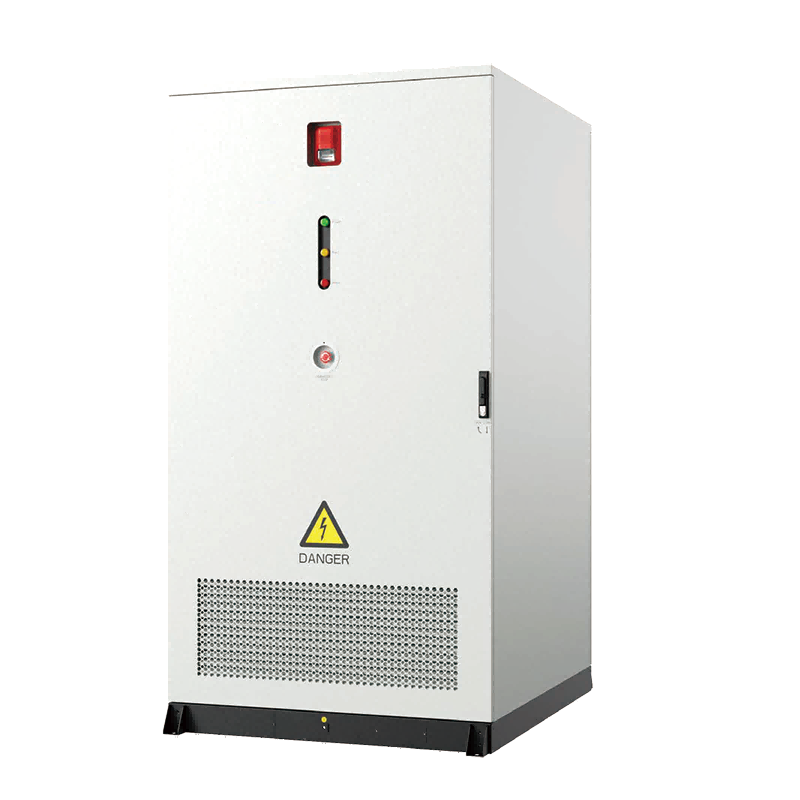
Commercial and industrial energy storage systems serve facilities with larger electricity demands, such as factories, warehouses, office buildings, retail properties, and selected infrastructure projects. A properly designed battery system can store solar generation, shift electricity use to different times of day, and support selected loads when configured for backup operation.
For businesses, the financial value of battery storage depends on the local electricity tariff, demand charges, export compensation, operating schedule, and available incentives. In some markets, a battery can help reduce peak demand or increase the use of on-site renewable electricity. Savings are not automatic and should be evaluated against the full installed system cost.
PNG Solar offers integrated commercial storage options, including a 125 kW / 241 kWh LiFePO4 cabinet. Its published specifications include a nominal energy capacity of 241.15 kWh, an IP54 rating, smart air cooling, and a stated cycle life exceeding 8,000 cycles under specified test conditions. The appropriate configuration depends on the site's load profile and project requirements.
See the PNG Solar 125 kW / 241 kWh LiFePO4 energy storage cabinet for the product's technical specifications.
For larger projects, engineering teams should also assess the power conversion system, grid connection, protection coordination, ventilation or cooling, fire safety, communications, commissioning requirements, and applicable local standards.
Off-Grid Solar Systems and Backup Power
In off-grid applications, a LiFePO4 battery stores solar electricity for use when the panels cannot generate enough power. These systems may serve remote homes, farms, telecommunications equipment, isolated commercial facilities, and locations where grid access is limited or unavailable.
Off-grid systems require more careful energy planning than many grid-connected installations because the battery and solar array must support demand during periods of poor weather and limited sunlight. Designers should account for daily consumption, peak loads, autonomy requirements, seasonal solar production, generator backup if applicable, and conversion losses.
Hybrid systems combine solar generation, battery storage, and a grid or other backup source. Their controls determine when electricity is stored, consumed, exported, or supplied from an alternative source. The right setup depends on the intended operating mode and local grid requirements.
For system-level planning, explore PNG Solar's 100 kW / 200 kWh integrated storage cabinet as an example of a larger battery-and-inverter configuration. Confirm its suitability with the project engineering team before specifying it for an off-grid or backup application.
How to Choose the Right LiFePO4 Solar Battery
Choosing a battery starts with understanding how much energy the site uses and when that energy is needed. The following considerations help buyers compare products more accurately.
- Usable capacity: Calculate the required energy in kilowatt-hours (kWh), taking account of the permitted depth of discharge and conversion losses.
- Power rating: Check the continuous and peak charge and discharge power against the site's loads and solar generation.
- Cycle life and warranty: Request the test conditions, end-of-life definition, warranty duration, and throughput limits.
- Inverter compatibility: Confirm voltage range, charge current, communication protocols, and supported BMS integration.
- Environmental conditions: Review operating temperature, humidity, enclosure rating, cooling design, and installation location.
- Safety and compliance: Verify the documentation and protection features applicable to the exact model and destination market.
- Expansion requirements: Determine whether additional battery modules can be connected and what limits apply to parallel operation.
- Total cost of ownership: Compare initial purchase price with installation, maintenance, efficiency, usable capacity, warranty, and expected lifetime energy delivery.
For international buyers, it is also important to confirm shipping requirements, documentation, after-sales support, and whether the selected system meets local electrical and fire codes. Product specifications should always be checked against the latest manufacturer datasheet.
How to Estimate the Battery Capacity Needed for Solar Storage
A simple preliminary estimate starts with the amount of electricity the battery must supply during the intended backup or discharge period. Divide the required energy delivered to the loads by the usable fraction of battery capacity and the estimated discharge-path efficiency.
For example, suppose a household needs 10 kWh of electricity from its battery overnight, the permitted depth of discharge is 90%, and the estimated discharge-path efficiency is 95%.
Required nominal battery capacity = Required delivered energy ÷ (Usable discharge fraction × Discharge-path efficiency)
10 kWh ÷ (0.90 × 0.95) ≈ 11.7 kWh
A nominal capacity of approximately 11.7 kWh is the mathematical starting point for this example. The final design should allow for additional losses, reserve capacity, aging, temperature, and actual load requirements.
This calculation does not size the inverter or solar array. The inverter must handle the required power, while the solar array must generate enough energy to meet demand and recharge the battery under expected weather conditions. A qualified designer should validate the complete system.
Why Consider PNG Solar for LiFePO4 Energy Storage?
PNG Solar supplies photovoltaic modules, lithium batteries, inverters, and integrated energy storage systems for residential and commercial projects. Its product range includes smaller battery configurations and larger commercial storage cabinets, allowing buyers to evaluate solutions according to their required capacity and operating profile.
When evaluating PNG Solar products, buyers can review published technical data, including battery chemistry, nominal capacity, operating voltage, cycle-life conditions, enclosure rating, cooling method, communication interfaces, and stated compliance information. These details help installers and project developers assess whether a particular configuration fits their application.
For projects that require a coordinated solar and storage package, explore PNG Solar's solar power and energy storage solutions. Share the required energy capacity, rated power, installation environment, destination market, and preferred inverter arrangement when requesting a quotation.
The most suitable LiFePO4 battery is not necessarily the one with the largest capacity or the highest advertised cycle count. It is the one whose safety protections, usable energy, power output, warranty, and operating characteristics match the project's real requirements.
Frequently Asked Questions About LiFePO4 Solar Batteries
What is a LiFePO4 battery used for in a solar system?
A LiFePO4 battery stores electricity generated by solar panels for later use. Common applications include residential self-consumption, backup power, off-grid electricity, and commercial or industrial energy storage.
Are lithium iron phosphate batteries safer than other lithium-ion batteries?
LiFePO4 batteries generally have favorable thermal stability compared with many nickel-rich lithium-ion chemistries. However, no lithium battery is completely risk-free. A properly designed BMS, electrical protection, installation, temperature management, and applicable fire safety measures remain essential.
How many cycles can a LiFePO4 solar battery last?
Cycle life varies by product and test conditions. Some stationary storage products specify several thousand cycles, while certain PNG Solar commercial cabinets list more than 8,000 cycles under specified conditions. Actual performance depends on temperature, charging and discharging rates, depth of discharge, and operating practices.
How many years does a LiFePO4 battery last?
A LiFePO4 battery may last for many years, but there is no universal service-life figure. Calendar aging, cycle frequency, temperature, operating settings, and warranty conditions all affect how long it remains suitable for use. Review the manufacturer's warranty and end-of-life capacity definition for the exact model.
Can a LiFePO4 battery be charged with any solar inverter?
No. The battery voltage range, charging limits, discharge current, inverter settings, and BMS communication must be compatible. Check the battery and inverter documentation and confirm compatibility with the manufacturers before installation.
Can a LiFePO4 battery provide backup power during an outage?
Yes, when the solar storage system includes suitable backup functionality and is correctly configured. Available backup power depends on battery capacity, inverter output, critical-load requirements, and the system's operating mode. Not every grid-connected solar installation provides backup power.
What LiFePO4 battery capacity does a home need?
The required capacity depends on nighttime electricity consumption, critical loads, desired backup duration, permitted depth of discharge, and system efficiency. Review actual electricity usage and calculate usable energy needs before selecting a battery.
Does PNG Solar offer commercial LiFePO4 energy storage systems?
Yes. PNG Solar publishes commercial and industrial integrated energy storage cabinets, including 100 kW and 125 kW systems with different battery energy capacities. Buyers should review the individual product specifications and confirm the appropriate configuration for their project.